As I set out to write this blog, I planned to post a new train of thought every 3rd Saturday. But 4 September passed by and so did 25 September. How hard can it possibly be to write a short essay every 3 weeks? Maybe if I cared more or was better organised…
With at least two deadlines in the rearview mirror, I considered to delete the blog. I often do this. I’d start a new calendar on 1 January, develop a colour-code, etc. I would fail to do whatever I planned to do with it at the latest by February and end up tossing the booklet. There could never be a recovery from a failed intention.
In a passing manner, I mentioned this to a friend who was dealing with her own self-imposed deadlines as she is planning to launch an inspiring kickstarter. She took a sip of her cappuccino and said: ‘no-one cares when you publish’. She meant it in an encouraging manner and emphasised the ‘when’.
And, just like this, before I had finished my own coffee, her words changed how I saw things. My little place of the internet is mine to curate at my convenience. Yes, it would have been so elegant if I published a post every 3rd Saturday, eventually added an interview every 2nd Tuesday of every second month, then a book review every 1st of the month. I’d be so proud of the regularity, I’d bask in it. Alas, I’m not there yet. But I want to write. So I’ll do.
As part of my attempt to finish my PhD this year, I decided, sometime in July, that I’d spend 2 hours on it every day. I’m currently 75 hours or so behind. But as I began looking at the thesis as something I wanted to write, rather than something I had to write, I would no longer get freaked out by the buildup. I don’t have to give it 75 hours, I get to. And I realise that Floodplain is such a privilege, too. I don’t have to write my 4 September post. I get to. So, here it is, a few weeks late, the 4 September musings. To quote one of my favourite authors, Elizabeth Gilbert, ‘Onward!’
When the thought first emerged this spring, I mistook it for a dark one. After Sam and I had spent 10 months apart in different countries, he, surrounded by people, me, struggling with loneliness in increasingly strong and diverse ways, I was hurting, and I wanted him to grasp, to really grasp how I was hurting and how much. Yet, one evening, sitting on the couch and staring out into the garden, I concluded, with immediacy and finality that he couldn’t.
Following that initial realisation that he, even he, could not without turning dishonest say more than that he understood that I was hurting, I have spent hours juggling that insight in my mind. I have since realised that not only could he not understand me, I also could not understand him. Every time he said that he wished for some silence, my instinctive reaction was that he was mocking me, his words felt like punches to the stomach. In my false belief that I knew how it was for him to be with people, I negated his feelings and, on top, turned them against him.
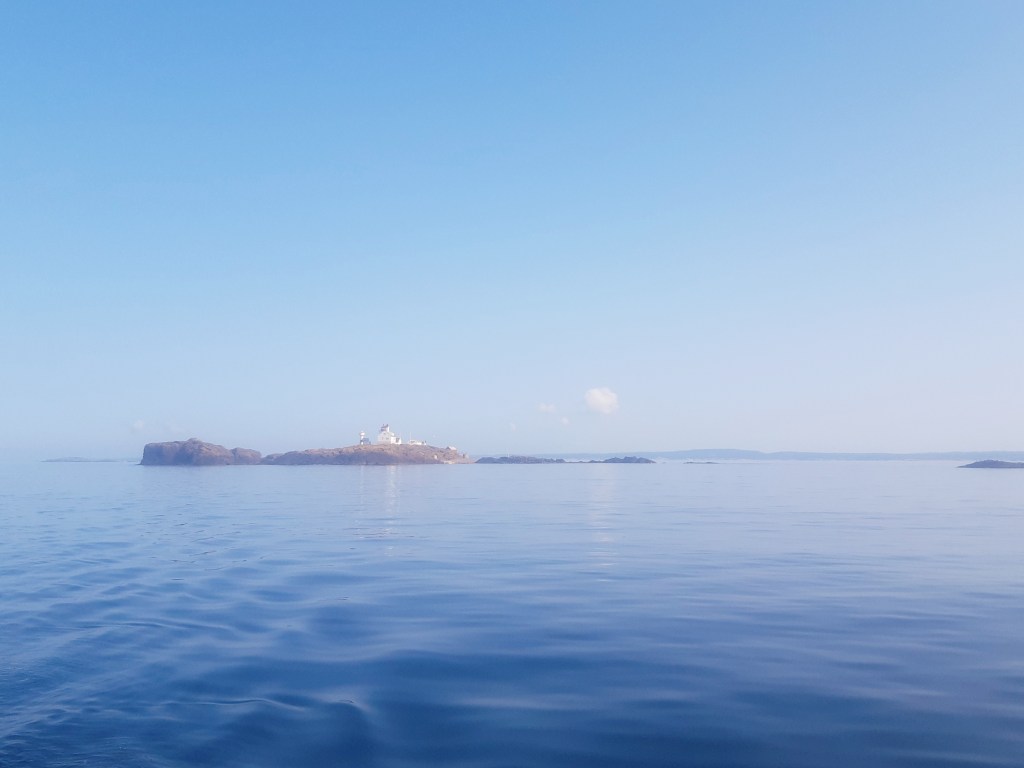
A question then forced itself upon me. If we who love each other cannot grasp more than that the other is feeling discomfort, can any person ever really understand another? As I articulated the question, I felt as if a dense, dark cloud expanded in my mind. If no-one can understand one another, aren’t we doomed to remain what we were not built to be, islands, in vicinity of, yet isolated from one another?
I decided to play with the thought. Could I reframe what not understanding meant? What if the insight was not dark and heavy but light? What if the realisation that our capacity to understand was limited was not suffocating but liberating? A ray of sun then pierced through the grey mass. If we cannot understand, we only have to acknowledge and care. That is much simpler and well within our capacity. “I recognise that this is your reality. Is there something I can do to help?”
But not: “I understand.” Although we might want it to be true, it will seldomly be. How could I have communicated my loneliness to Sam? How can a person who only ever traveled to go on holiday understand the physical desire of a migrant to hear her mother tongue spoken on the street, not just the radio? How can a white European understand the experiences of a black European and how can a white collar understand a blue one? Brexit and Trump and still we think we understand and allow ourselves to judge and the rifts between us deepen.
I think we don’t have a clue. About the small, why a remark sets someone off, the big, a soldier’s experience of PTSD, or the political. However, we don’t need a clue. We need to listen and acknowledge, care if we can and, even when difficult, or particularly when difficult, reserve judgment. We need to accept that everyone’s reality, which might not be our reality, is real for her or him.
This might sound defeatist but at least for me, the clouds have cleared. We are islands but we can throw each other horseshoe buoys when the other is drowning as we are standing on firm land, knit him a blanket when he is freezing even as we are sweating and say “I am here!” when being there is all that is possible. Not expecting from Sam that he reads my mind and soul means not setting him up for failure where I accuse him, righteously, but not right, of diminishing or outright denying my reality, achieving nothing. It also means not setting myself up for disappointment and keeping my bandwidth free for what Sam does give me plenty of, namely love, care and coffee. It means accepting the validity of my own emotion without subjecting it to external confirmation and therefore lending legitimacy to anything I might want or need to do to deal with it. It means appreciating that my experience is different, in its way unique, and that I am richer for it.
There is one exception to what I am writing. Every now and then we come across a sentence in a book, or a verse in a poem, that feels as if the author has looked right into our soul. Like the emergence and dance of the auroraborealis or the sudden sighting of a wild moose, it captivates the entire being. It is a sensation so rare but at the same time universal that it would deserve its own word. Knowing that understanding is so evanescent we could, liberated from the duty to portray and the expectation to receive it, truly bask in the unbearable magic when we are, in fact, privy to it.
The other day, I sent a message to Sam, writing that I felt as if I’d never had an authentic thought. The articulation was perhaps a bit dramatic but I thought that it communicated clearly that as I continue to shed old patterns of behaviour and thought or, in other words, as I Marie Kondo (used as a verb) the hell out of my soul, I cannot see what, if anything, will remain. Do I possess a core that has been eclipsed but not destroyed by 3 decades of unconscious absorption of my environment? Who am I?
My curriculum vitae from a few years ago reads like one Microsoft Word would use for one of its templates. Legal degrees and an exiting career start. An equal number of languages and hobbies that make me sound both peculiar and reliable. A mugshot and compulsive formatting in shades of black, grey and blue.
In my old life, I worked as a research fellow in international development. A few years and a minor breakdown into it, I quit the job, keeping, as a sort of severance, only my recent PhD enrollment confirmation, a handy tool, I thought, that would eventually allow a smooth transition into my next adventure. A friend recently pointed out how ludicrous that was to struggle to regain sanity while at the same time worrying about how the cv, that terrorist instrument in which the only permitted direction is up, would portray the sudden hitch.
In my new life, the doctoral project feels like a remnant from an old life, as if I had time-travelled. All else is new to me. I no longer live in a city but a small town in the Norwegian countryside. While my job is technically in Oslo, the public administration position is far from the prestige of purportedly saving an entire government from itself. Norway is the first country I’ve moved to for love and I’d do it again in a heartbeat. Sam is… well, Sam is home. Also, Sam is wild. His second name is Outdoors and ever since we’ve begun to hang out I’ve experienced more awe than in all of my previous life combined.
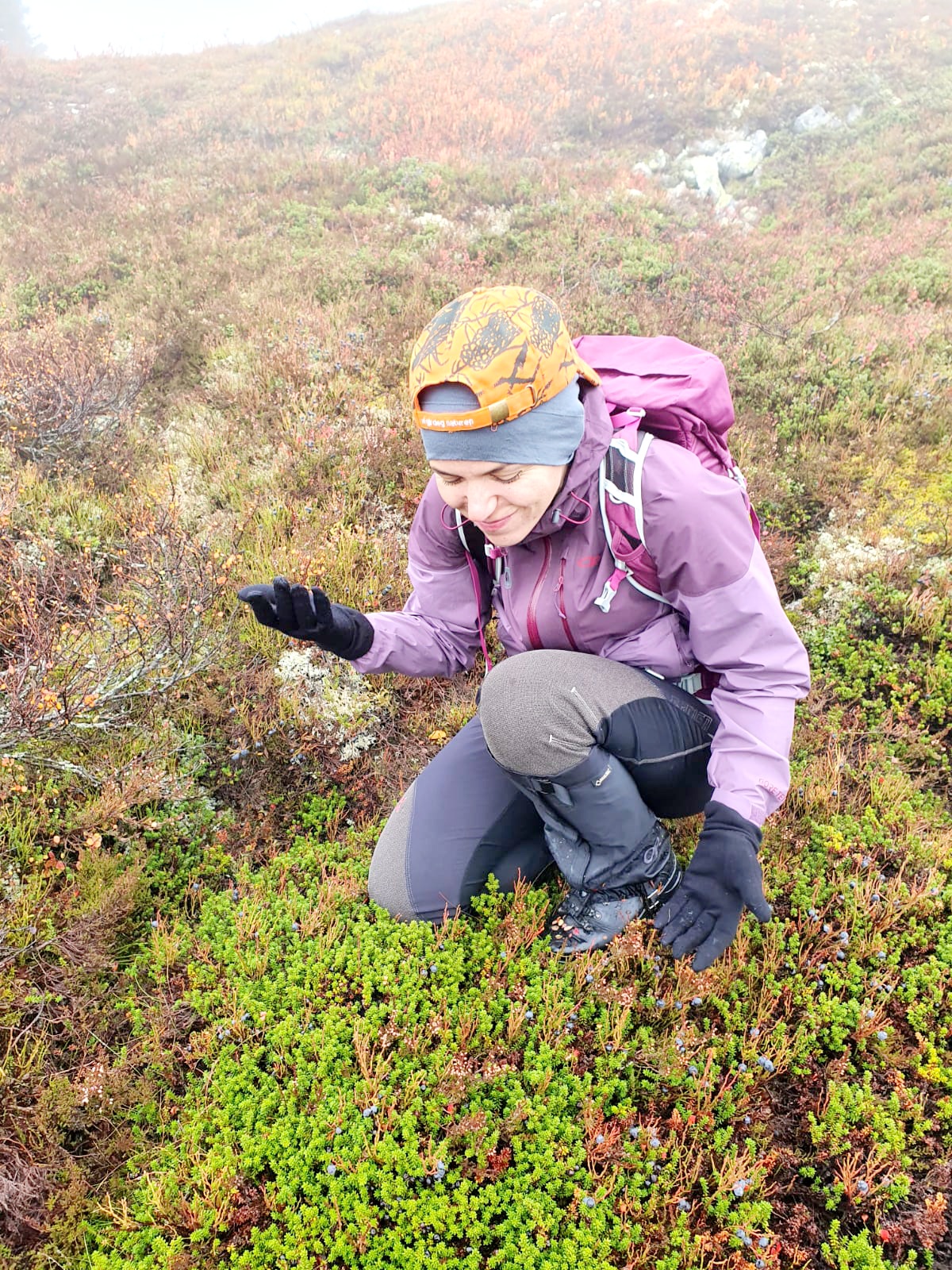
So, here I am. Nowhere close to where I’d thought I’d be at 33 but exactly where I want to be nevertheless. For one, there is Sam. I’m starting to take seriously my impulses to write and I’ve learned how to make blueberry jam out of blueberries I have picked in the surrounding forest. Sometimes I just breathe. At the same time, I am beginning to question all I thought I knew. I am not doing this in a structured manner but keep being overcome by pressing questions and insights that spring seemingly out of nothing. I am questioning what’s important to me, what I care about. I’m trying to figure out where ideas about me and criteria for success that I no longer recognise as my own initially came from. Some days, as if to follow up on a wholesale destruction of 20 years worth of diaries that I completed two summers ago, I want to dissolve into thin air, so suffocating the past feels. Other days, I don’t even know what foods I like and wonder whether I bought that book because I thought I’d enjoy reading it or because it fit with an idea of myself I wanted to portray after I’ve mindlessly picked up said idea that such a portrait was desirable.
Although I sometimes find the process upsetting, even scary, I don’t actually mind the dissolution of the mirage of me as otherwise there’d be no space left for me, that core, whatever she may look like. I want to be patient, and bask in the liberating and invigorating periods, but I am also curious to meet her. Clueless as to where to start, I sometimes make lists of things I still, again know for sure. The lists are short. I love Sam. I like walking barefoot. And as I draft this essay and listen to summer rain, thunder and the neighbour’s kid’s laughter, I know that I like the sounds of those, too. It’s a start.
 Floodplain